
Building trusted relationships between rural communities and decision makers, what’s needed for success?
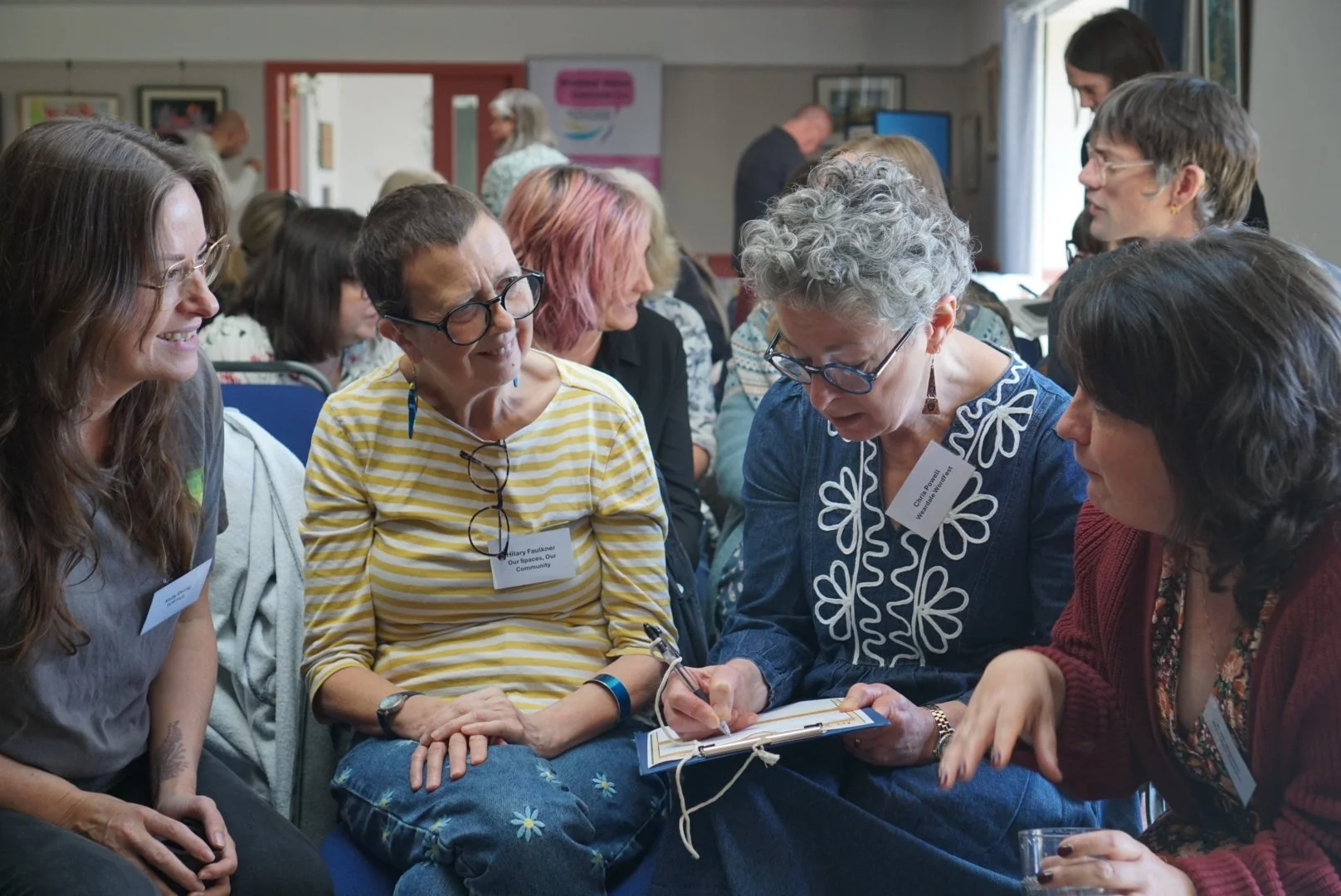
Community researchers in conversation at Rural Durham Community Research Networks event, September 2026
The Rural Durham Community Research Network recently brought together sixty representatives from community groups, academia, and public and policy sectors to celebrate community-led research and explore how rural communities can build purposeful relationships with decision-makers.
Across talks and discussions, attendees said trust grows when people can see where power sits, understand how decisions are made and recognise their knowledge in the outcome.
Community researchers, who spent the past year gathering stories and experiences across rural communities, reflected on their work and shared early findings. This was an important part of the event, reminding us that community-led research offers a unique approach where they have already built trust in their community, long before consultation started. Their local knowledge and trusted role in the community mean they understand local nuances, social norms, and communication styles; this helped them develop methods suited to their community. Their research was more inclusive and relevant because the questions were chosen by people who understand the issues. For communities, participation was more meaningful as it was part of an ongoing relationship, rather than a temporary exercise that ends once responses have been collected.
As findings shaped by rural communities emerge, decision makers have a crucial opportunity to learn from the evidence, build relationships, and invite communities to co-design solutions.
When attendees were asked what builds or undermines trust between communities, academics, and decision makers, they repeatedly told us open communication, active listening, and a clear feedback loop. Communities need to know what was heard, how it was interpreted and whether it changed decisions.
Trust also depends on transparent, realistic expectations. Communities want to know what is open to influence, who will decide, and when they will hear back. Genuine influence begins when communities help define the problem and shape solutions.
Attendees also spoke about what damages trust; themes included long silences, unclear processes, changing professionals, unanswered questions and decisions that appear to have been made in advance. Inviting communities only after a plan is fixed risks turning engagement into a tick-box exercise, and each experience makes the next invitation less worthwhile.
A panel hosted by Damian Hebron from The Young Foundation with Kate Burrows, Durham Community Action, Bekki Shenfine, Durham County Council’s Public Health team and Britta Turner, Durham University challenged the idea that power is fixed and becomes less by sharing. They argued that by combining knowledge, expertise, and capacity, this creates greater power and enables the whole system to achieve more.
The panel reflected on realism and why realism matters in relationships. Trust does not require institutions to give up every decision, and influence does not mean that every request will be fulfilled. It requires transparent boundaries, clear and fair explanations and continuity between words and actions. The strongest partnerships are built when every person involved feels safe to disagree when needed, decisions are accountable, and people can see what happened to their contribution.
New community research beginning this autumn creates an opportunity to act on these lessons. The new projects have emerged from lived experience and issues noticed locally. If this work is to meaningfully influence decision-making and services, building trusted relationships and ensuring communities are involved in shaping solutions to some of the challenges they unearth is crucial.
The event reminded us that before decisions are made that impact a community, it’s important to identify what communities can genuinely influence and invite them in early enough to do so. Treat power as something that can grow through collaboration, make the process understandable, agree how feedback will be used, report back on the outcome and carry the relationship forward beyond the finished work.
Interested in joining future events?
As RDCRN’s network gatherings grow, we invite more community groups, academics, and public sector partners to join the conversation. By sharing perspectives, we can work towards more meaningful, inclusive, and fairer solutions for rural communities.