
Domestic abuse support, disability access, and young people’s opportunities among projects awarded funding to lead rural research
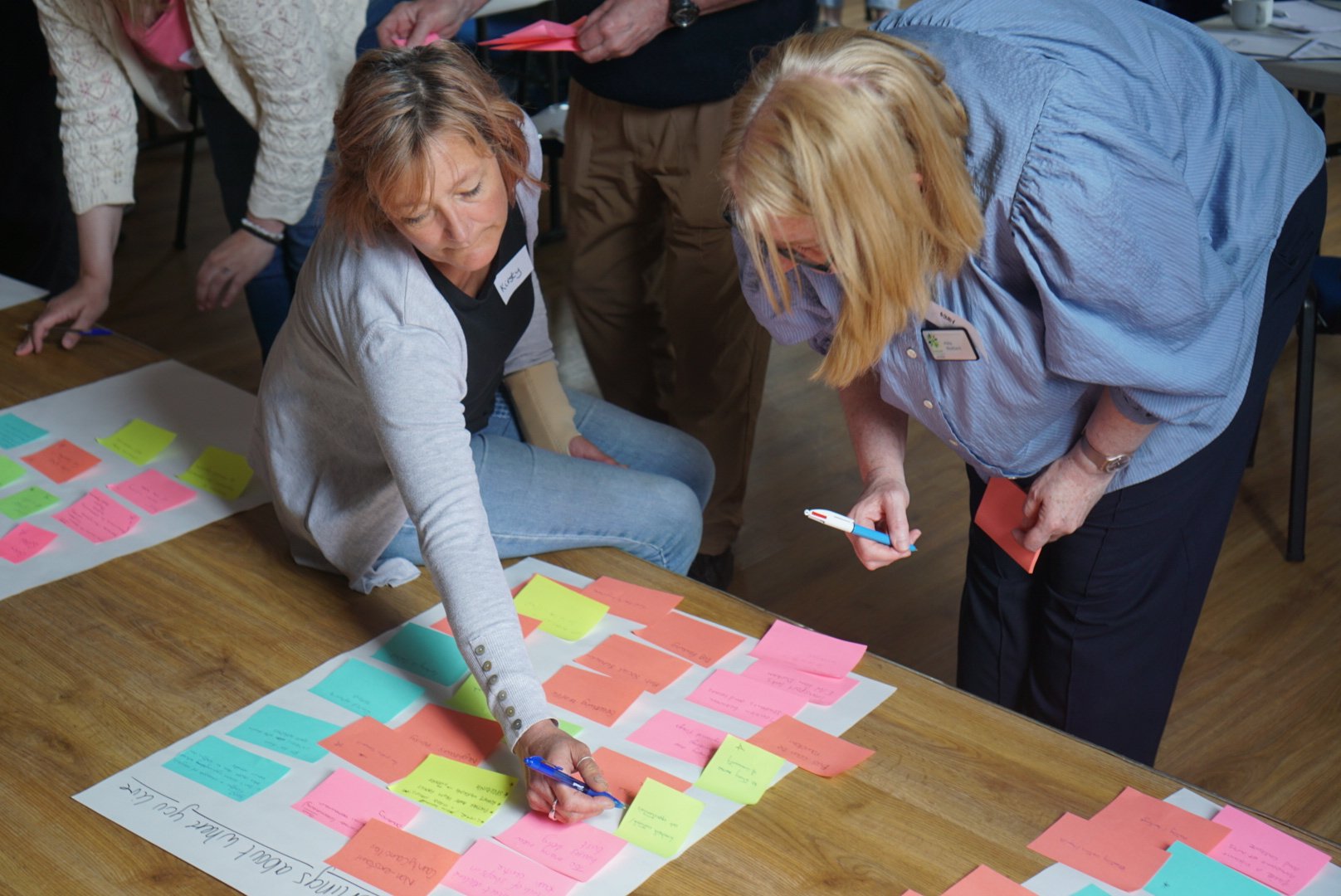
Community Research Training Participant, May 2026
The Rural Durham Community Research Network (RDCRN) is excited to announce its second round of funded community-led research projects.
Four community research teams from across County Durham have been awarded funding to lead research relevant to their local communities, addressing rural inequalities and enhancing the understanding of life in rural Durham.
The announcement follows a series of workshops and training sessions, which brought together voluntary organisations, community groups and volunteers to explore the wealth of local knowledge that lives within rural communities and build essential skills for community-led research.
Interested participants were invited to apply for our annual funding round, and applications were reviewed by a panel of five, including RDCRN partners not directly involved in its running, Point North, Investing in Children and Northern Heartlands. Taking the same approach as 2025, each proposal was assessed against published criteria, scored individually, and discussed collectively before the panel reached decisions. In total, £37,235 was awarded.
“Over the last year, we’ve seen community research projects support young people and volunteers to develop lasting research skills and address important issues for their communities. Building on the research findings, knowledge developed, and confidence gained in year one, we’re delighted to see this continue with a new round of funded community research projects that will go on to highlight new and vital insights for rural Durham. This funding reflects the hard work, dedication, and commitment to highlight and address rural need.” - Kate Burrows, Executive Director, Durham Community Action, and Paul Cowie, CEO, Rural Design Centre
RDCRN is supported by UK Research and Innovation (UKRI) through the Young Foundation. The Community Research Networks programme puts people in the driving seat so they can lead research, instigate local action and change on the terms of their local communities.
By bringing together local knowledge and research tools, RDCRN is generating a bank of community-led insight that reflects the lived experiences of people in rural Durham. This momentum builds on the growing voices that are working collectively to inform decision-making and wider policy, leading to a more equitable future for rural communities.
Victim Voice Durham
Victim Voice Durham will sensitively explore the experiences and hidden barriers of women accessing support for domestic abuse through expressive art forms and safe conversations.
The research will be informed by women with lived experience, ensuring its trustworthy, meaningful and relevant, with women being offered the opportunity to take part in County Durham.
Taking a domestic abuse-informed approach, a series of focus groups and art-based sessions hosted in safe settings, as well as an anonymous survey, will provide women with a space to share their voices and stories.
Through this approach, the research will help amplify the voices of domestic abuse survivors, challenge systemic barriers, and drive meaningful change for women living in rural communities.
The research findings will be shared anonymously through an art exhibition and report, ensuring local women’s organisations, councillors, MPs and relevant commissioners can connect with the real-life experiences of women survivors of domestic abuse.
Music in the Heart of Teesdale
Young people will shape and lead research, supported by Music in Teesdale, exploring access to cultural activities and how existing barriers to accessing these opportunities could have an impact on their wellbeing.
The research will be shaped by Wear’d Aliens, an open-access, multi-ability youth folk band made up of 20 young people from the local community, and will bring to life how young people in rural communities interact with music, dance, art, theatre and sports.
To ensure the research remains inclusive and accessible for all ages, the research team will encourage young people from Weardale and Teesdale to share their thoughts and feelings through discussions, written feedback and the creation of zines and collages.
Through the ideas of young people, the findings will be shared creatively, alongside a report, and will build on earlier community-led insight linked to transport barriers, the role of heritage in communities and the value of shared spaces.
Weardale Horizons
Weardale Horizons will support a team of parents, carers and a young person with lived experience to lead research investigating opportunities, barriers, and support needs for adults with learning disabilities and additional needs in Weardale.
Through a series of creative workshops, activities in the community and an easy-read survey, the community researchers will unearth the unmet needs and barriers that may contribute to how an adult with a learning disability or additional need connects with community life.
Through the trusted role of community members and safe spaces, the research will invite people to share their stories and experiences, helping to understand hidden inequalities that may exist in rural settings and what they would like to see to improve their local community.
Embedding community voice throughout the research is central to their approach, so before the research findings are shared, they will invite people with lived experience to check it truly reflects their needs and experiences.
The research findings will be shared through an exhibition, a short film and an easy-to-read report with the local community, local authority, public health team, healthcare providers and VCSE organisations, ensuring that the voices of adults with learning disabilities and needs in rural communities are amplified and heard.
Stoke the Flame
A group of young researchers supported by Stoke the Flame will carry out research building on earlier research findings exploring how intergenerational connection can improve the social outlook of rural communities.
The young researchers will examine the barriers that can prevent trust, understanding and connection across different age groups and how this contributes to their experience living in a rural community and their access to opportunities.
By reaching out to local schools and community groups, young people and adults in Weardale will be invited through a series of surveys, focus groups and creative activities to honestly reflect on their feelings and experiences.
Plans for sharing the research findings will be shaped by the young researchers and will include a small event. The findings will be used to remove barriers and raise awareness across organisations, services and communities.
Beyond the research findings, young researchers will develop skills, knowledge and confidence, supporting them in future life.
Network events
Anyone with an interest in learning more and connecting with the community research teams is welcome to join one of our future network events, or alternatively, please get in touch by contacting jemma.austin@durhamcommunityaction.org.uk
Find out more about the network
Read more about the Rural Durham Community Research Network or get involved